History is often unkind to those who resist quietly but effectively. Yet, in the story of King Jaja of Opobo, we find a man whose life journey from slavery to sovereignty remains one of the most extraordinary narratives in African history. He was not born into royalty, nor did he inherit power. He earned it. And in doing so, he redefined what it meant to lead, to negotiate, and to resist.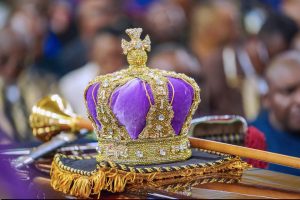

Born around 1821 as Mbanaso Okwaraozurumba in Igboland, Jaja’s early life was marked by tragedy and displacement. As a young boy, he was captured and sold into slavery, eventually finding himself in Bonny, one of the most prominent trading ports in the Niger Delta. But where many would have been broken by such beginnings, Jaja distinguished himself through intelligence, discipline, and an uncanny understanding of trade and human relations.
Under the tutelage of Chief Alali, a powerful merchant in Bonny, Jaja rose rapidly within the trading system. He proved not only to be a skilled businessman but also a natural leader. Over time, he earned his freedom and became head of the Anna Pepple House, one of the leading trading houses in Bonny. In a society where power was closely tied to commerce, Jaja had effectively positioned himself at the center of economic and political influence.
However, Bonny was not without its internal conflicts. Rivalries between powerful houses, particularly between the Anna Pepple and Manilla Pepple factions, created deep divisions. When tensions escalated, Jaja led his followers comprising traders, dependents, and loyalists away from Bonny in 1869. This was not merely an act of protest; it was a calculated move toward independence.
They settled in a new location, which would become Opobo. There, Jaja established a new kingdom and crowned himself king. But his kingship was not symbolic it was built on structure, economic strength, and political organization. By strategically positioning Opobo along key trade routes, he effectively controlled access to the hinterland markets.
European traders who once operated freely in the region now had to negotiate with Jaja directly.
It is here that Jaja’s genius truly comes into focus.
At a time when European imperial powers were expanding aggressively into Africa, Jaja chose diplomacy as his primary weapon. He entered into treaties with British traders and officials, not as a subordinate, but as an equal. These agreements were designed to protect Opobo’s economic interests and ensure that trade occurred under his authority. He refused to allow direct access to inland markets, thereby maintaining a monopoly over the lucrative palm oil trade.
This strategic reliance on formal agreements earned him the title “Treaty King.” But this title should not be misunderstood. Jaja did not use treaties to surrender power; he used them to assert it. He understood the language of European commerce and diplomacy and turned it to his advantage. In doing so, he challenged the assumption that African rulers were incapable of engaging in complex international negotiations.
However, Jaja’s success would ultimately provoke the very forces he sought to manage. The British, frustrated by their inability to bypass his control, began to view him as an obstacle to their economic ambitions. The balance of power began to shift not because Jaja weakened, but because imperial interests grew more aggressive.
In 1887, under the pretense of negotiation, Jaja was invited aboard a British ship. What followed was not diplomacy, but deception. He was arrested and exiled to the Caribbean, first to St. Vincent and later to Barbados. It was a calculated removal of a leader who had refused to yield.
Jaja died in 1891 while attempting to return home. Yet, even in death, his legacy endured. He remains a symbol of resistance, not through war, but through strategy, resilience, and an unshakable commitment to sovereignty.
King Jaja’s story is not just about the past, it is a mirror for the present. It reminds us that leadership is not defined by origin, but by vision; that power is not only seized, but negotiated; and that true sovereignty demands both courage and intellect.
He rose from bondage to build a kingdom. He negotiated with empires and refused to bow. That is why history remembers him not just as the founder of Opobo, but as the Treaty King.
#eveafriquenews