

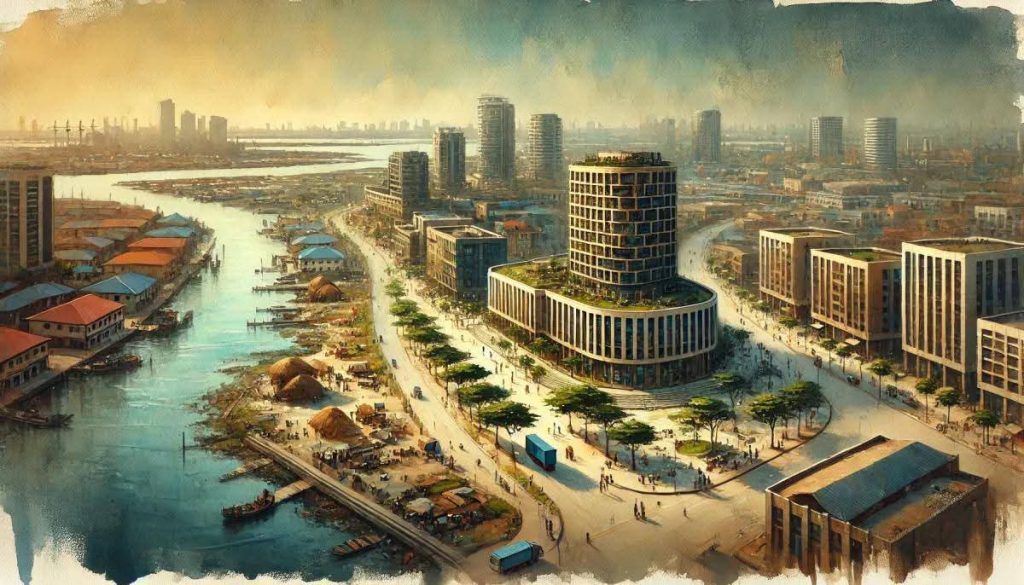
Once celebrated as a bold vision for urban renewal, Rainbow Town in Port Harcourt now stands as a painful reminder of how abandoned or poorly executed projects can weaken economic growth and public confidence. What was meant to symbolize modern housing development and urban transformation has instead exposed the recurring problem of incomplete government-backed projects across Nigeria.
The economic consequences of abandoned projects go far beyond abandoned buildings and silent construction sites. They represent wasted public resources, lost employment opportunities, declining investor confidence, and deepening hardship for ordinary citizens. In a city like Port Harcourt — the economic heartbeat of the Niger Delta — such failures carry enormous implications.
Rainbow Town was expected to boost economic activity through construction jobs, improved housing, business expansion, and increased property value. Artisans, contractors, transport operators, traders, and small businesses all stood to benefit from the massive development. Yet, when projects stall or remain incomplete, the ripple effects are devastating. Workers lose jobs, businesses collapse, and communities that anticipated economic revival are left disappointed.
Ad space
Even more troubling is the waste of billions of naira committed to projects that fail to deliver long-term value. At a time when Nigeria faces economic challenges, unemployment, and infrastructure deficits, abandoned projects reflect poor planning, weak accountability, and ineffective governance. Public funds tied down in unfinished developments could have been used for schools, healthcare, roads, and other urgent social needs.
The impact on urban development is equally severe. Abandoned structures often become symbols of neglect. They encourage environmental decay, reduce property values, and sometimes become hideouts for criminal activities. Instead of attracting investment, they send negative signals to potential investors who may fear policy inconsistency and project instability.
Port Harcourt’s reputation as the Garden City depends not only on vision but also on execution. Development is not measured by groundbreaking ceremonies or media publicity, but by completed projects that improve lives and strengthen the economy. The city cannot afford to continue accumulating monuments of abandonment while residents struggle with unemployment, housing shortages, and declining public infrastructure.
Government authorities, private developers, and relevant agencies must treat project completion as a priority rather than an option. Transparency in funding, proper supervision, continuity in policy implementation, and accountability for contractors are essential if future projects are to succeed.
Rainbow Town should serve as a lesson, not merely a disappointment. A city that abandons its projects risks abandoning its economic future. For Port Harcourt to truly grow into a modern and competitive urban centre, development initiatives must move beyond promises and become lasting realities that benefit the people.
Tonte Igbikialabo




Comments