
The political crisis in Rivers State has once again exposed one of the state’s most sensitive and enduring fault lines the upland and riverine dichotomy. What should merely describe geography has, over the years, evolved into a political narrative powerful enough to influence elections, appointments, alliances, and even governance itself.
Today, that divide is increasingly becoming a dangerous tool in the struggle for political relevance and control.
Rivers State is blessed with immense diversity. From the riverine communities stretching across Kalabari, Opobo, Bonny, and Okrika, to the upland areas of Ikwerre, Ogoni, Etche, Ahoada, and others, the state’s strength has always rested in its plurality. Yet, rather than harness this diversity as a source of unity and collective advancement, political actors have repeatedly weaponized identity for strategic gain.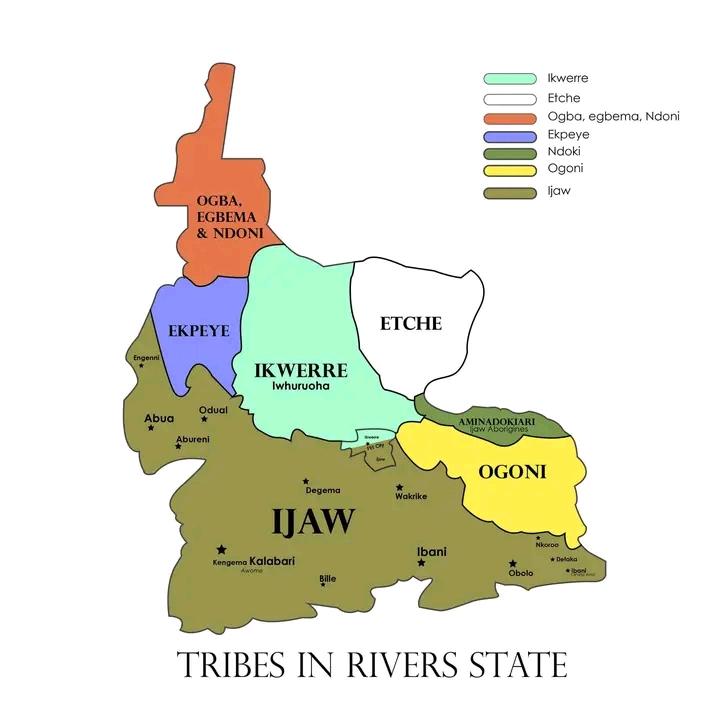
Ad space
The current political tensions have revived conversations around who should hold power, who has been marginalized, and which region truly controls the political structure of the state. Unfortunately, such arguments often reduce governance to ethnic arithmetic and geographical sentiment instead of competence, policy, and development.
The danger in this trend is obvious. Once politics becomes framed strictly around “us versus them,” governance suffers. Citizens begin to view leadership not through performance, but through regional loyalty. Public appointments are interpreted through the lens of balancing interests rather than selecting the best hands. In the process, distrust deepens, and the ordinary people both upland and riverine remain trapped in th same cycle of underdevelopment.
What makes the situation more troubling is that the challenges confronting Rivers State do not discriminate between upland and riverine communities. Youth unemployment, insecurity, decaying infrastructure, environmental degradation, and economic hardship affect citizens across the board. The fisherman in the creeks and the farmer in the upland areas are both struggling with the realities of an economy that demands stronger governance and less political division.
History also teaches a critical lesson: political divisions built on identity rarely end where they begin. Once leaders normalize sectional rhetoric, it becomes increasingly difficult to contain the resentment it creates. Communities that should be partners in development become suspicious of one another, while political elites continue to negotiate power at the expense of the people.
This is not to dismiss genuine concerns about representation. Inclusiveness matters in a diverse state like Rivers. Every region deserves fair participation in governance and access to development opportunities. However, representation should never become an excuse for political instability or a weapon for deepening social fractures.
The political class must therefore exercise caution. Rivers State cannot afford a crisis that hardens ethnic and regional sentiments at a time when unity and strategic development are urgently needed. Leaders must resist the temptation to exploit the upland-riverine narrative for short-term political advantage. The consequences could outlive the current political disputes.
What Rivers people need now is leadership that speaks the language of unity rather than division. The future of the state will not be secured by constantly emphasizing differences, but by building a shared vision rooted in equity, competence, and mutual respect.
The upland and riverine identities are part of Rivers State’s cultural and geographical reality. They should remain symbols of diversity not instruments of political confrontation.
At a critical moment like this, the survival of Rivers State’s political stability depends not on which side wins the divide, but on whether the divide itself is allowed to consume the state’s collective future.
Tonte Igbikialabo

Comments