

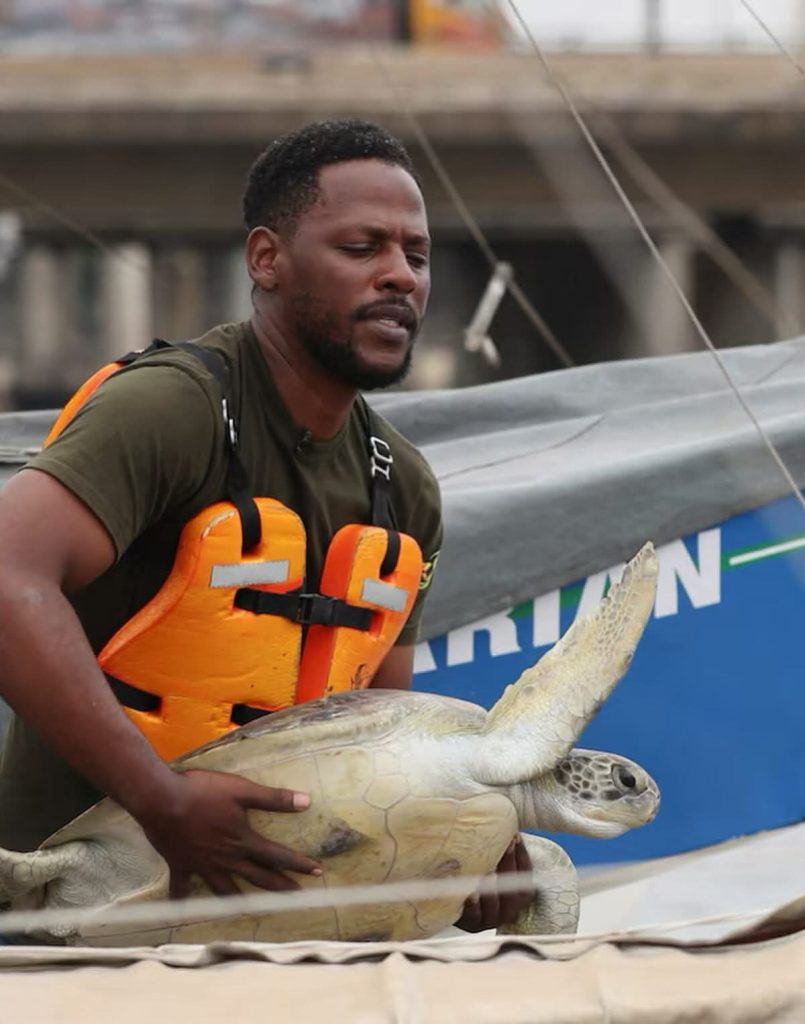
Plastic waste, discarded fishing nets, and rapid coastal development are devastating Nigeria’s sea turtle population, according to conservationists working to protect the endangered species.
“We’re seeing a drastic decline,” said Chinedu Mogbo, founder of the Greenfingers Wildlife Conservation Initiative, which has rescued and released more than 70 turtles in the past five years through its Lagos sanctuary. His team has treated Olive Ridley, Hawksbill, and Leatherback turtles, though limited resources make accurate population monitoring difficult.
Mostly self-funded, the group partners with local fishermen by offering net repair kits in exchange for rescued turtles or protected nests. “Fishers need income. We offer solutions so they don’t have to sell the turtles,” Mogbo explained.
Ad space
With no marine protected areas and shrinking nesting grounds, Nigeria’s coastline has become a trap for turtles. Mogbo urged state authorities to step in, but the national environmental agency has yet to respond.
Demand for turtle meat, shells, and eggs remains high, often linked to consumption and ritual practices. “We eat their eggs and sometimes give them to elders for voodoo,” said Morifat Hassan, a fish seller in Folu, Lagos, where turtles can sell for up to ₦90,000 ($60).
In July, rescuers saved a large green turtle named Moruf after it was trapped in a fishing net. Mogbo said they negotiated with fishermen to prevent the animal from being sold. “Normally, this turtle would be butchered or sold, but we intervened and will return it safely to the sea.”
Comments