

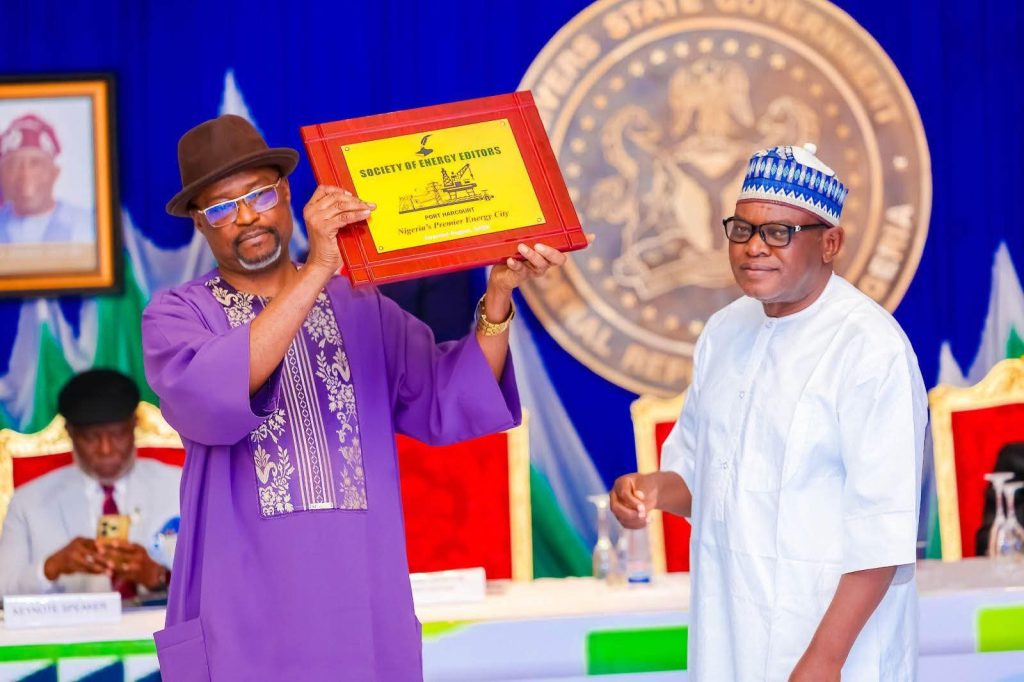
Port Harcourt has been officially declared Nigeria’s Premier Energy City, with the Rivers State Government pledging security, fiscal discipline, and policies that will attract new investments in the energy sector.
The declaration was made on Tuesday at Government House by the Administrator of Rivers State, Vice Admiral (Rtd.) Ibok-Ete Ekwe Ibas, represented by the Secretary to the State Government, Prof. Ibibia Lucky Worika.
He described the city as Nigeria’s “energy heritage” and the “cradle of the nation’s industrial dreams,” recalling its history in oil discovery, refining, petrochemicals, and oil services across the Niger Delta.
Ad space
Vice Admiral Ibas said the recognition was both a celebration of legacy and a call to greater responsibility. “Port Harcourt is not just Nigeria’s energy capital, it is destined to become the energy capital of Africa,” he declared.
He outlined plans to expand into renewables such as solar, wind, hydro, and gas, while deepening local content in oil and gas. He also promised a regional energy hub with world-class infrastructure, pipelines linking Nigeria to Africa, and stronger environmental safeguards for rivers, farmlands, and communities.
The government, he added, would support Port Harcourt’s re-enlistment into the World Energy Cities Programme (WECP) and host an annual International Energy Conference and Exhibition.
He emphasized that government alone cannot achieve this mission, urging the private sector to invest responsibly and calling on Nigerian youth to bring innovation into the energy industry.
The Chairman of the Society of Energy Editors, Malam Yakubu Lawal, praised Port Harcourt’s “glorious past” and “immense future” as an energy hub. He announced that the Society would sign an MoU with the Rivers State Government to attract international investment and establish an annual global energy conference.
Delivering the keynote, Vice Chancellor of Rivers State University, Prof. Isaac Zeb-Obipi, traced the city’s role in Nigeria’s energy story back to 1956 when oil was first discovered.
While noting its economic contributions, he also drew attention to environmental degradation in host communities. He called for diversification into gas, hydro, solar, and hybrid energy, along with human capital development and youth empowerment.
Prof. Zeb-Obipi further urged stronger collaboration among stakeholders, balanced energy reporting, better security, and reforms in education to prepare young Nigerians for future opportunities in the energy sector.
#eveafriquenews


Comments