
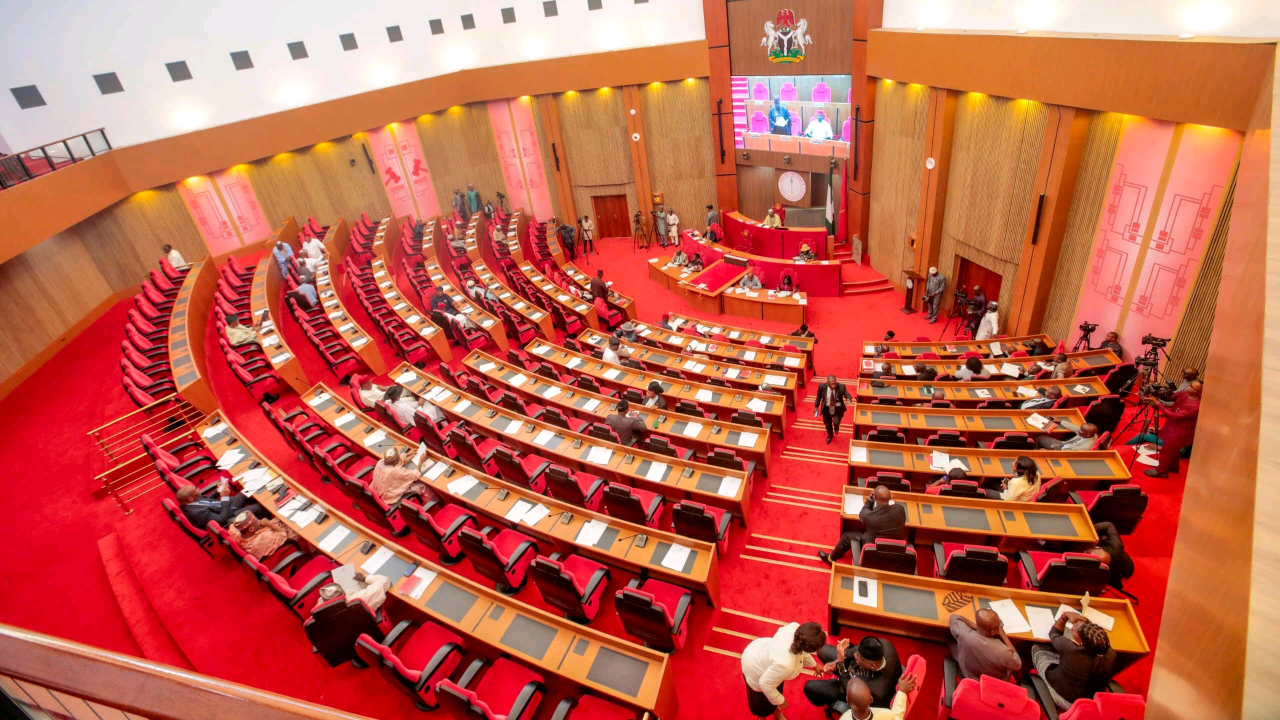
Senate Passes Electoral Act Amendment Bill
The Senate has passed the Electoral Act (Amendment) Bill, introducing revised provisions to regulate the conduct of federal, state and area council elections in the Federal Capital Territory (FCT).
The bill was approved on Wednesday after lawmakers concluded a clause-by-clause consideration in the Committee of the Whole, a process that allowed detailed scrutiny of each provision before final passage.
However, during deliberations, the Senate declined to make electronic transmission of election results mandatory, insisting that it has not removed digital uploads from Nigeria’s electoral framework.
Lawmakers voted against a proposal to amend Clause 60(3) of the bill to compel presiding officers to electronically transmit polling unit results to the Result Viewing (IReV) portal immediately after signing result forms.
Instead, the chamber retained the existing provision, which states that results shall be transmitted “in a manner as prescribed by the Commission.”
By this decision, the Senate left the mode, timing and process of result transmission to the discretion of the Independent National Electoral Commission, rather than embedding compulsory real-time electronic transmission into law.
Addressing concerns that followed the vote, Senate President Godswill Akpabio dismissed claims that lawmakers had rejected electronic transmission outright.
He explained that the Senate merely declined to impose an additional mandatory requirement, stressing that electronic transmission already exists under the current law and has been deployed in previous elections.
According to Akpabio, the Senate’s approach preserves existing provisions that permit digital transmission of results, while avoiding rigid legal prescriptions that could restrict INEC’s operational flexibility, particularly in areas affected by poor network connectivity.
Under the Electoral Act 2022, electronic transmission of results is allowed but not compulsory, with INEC empowered to determine when and how technologies such as the Bimodal Voter Accreditation System (BVAS) and the IReV portal are deployed. This framework provided the legal basis for electronic uploads during the 2023 general elections, even in the absence of a statutory obligation for real-time transmission.
The News Agency of Nigeria reports that the amended bill is intended to strengthen the legal framework governing elections in the FCT and is expected to be transmitted to the House of Representatives for concurrence before being forwarded to the President for assent.